
ROYAL BIRMINGHAM CONSERVATOIRE PUTS AN EAR TOWARD INCLUSIVITY WITH SOFTUBE HARDWARE ADDITION
How an accessibility push at the institution has enriched the experience of both visually impaired & sighted students & educators
We recently sat down to chat with Royal Birmingham Conservatoire educators Joe Wright and Jason Dasent to talk about the Conservatoire’s efforts to make their programs more accessible and the expected – and unexpected – benefits of the project. This conversation has been edited for clarity and length.
Courtney (Softube): At the Royal Birmingham Conservatoire, Console 1 Mixing System was recently added to the education program. What were your respective roles within the project?
Joe: We got some funding to get some equipment into our studios with the view of trying to make things more accessible. Jay has been absolutely amazing in helping us to do that. We're having to figure out how everything integrates into our studio and make sure everything is ergonomic. So, it's very much a work in progress. We've got seven Console 1 systems that we're looking to integrate across all of our studios. It's currently in three of our spaces and we're working on the rest.
“Accessibility is much more than the hardware and software being accessible, it’s about the personalities behind it, and this is why it was so easy to recommend Softube as a company to the Conservatoire."
We've had Jay teaching with us. So, Console 1 has been a crucial part in allowing us to do that. And Jay, I've said this to you already, so I hope I'm not embarrassing you too much, but having Jay on our teaching team has been the most enormous privilege. He's inspired loads and loads of people. So having that [Console 1] system in there and making that possible has been really valuable to us already.
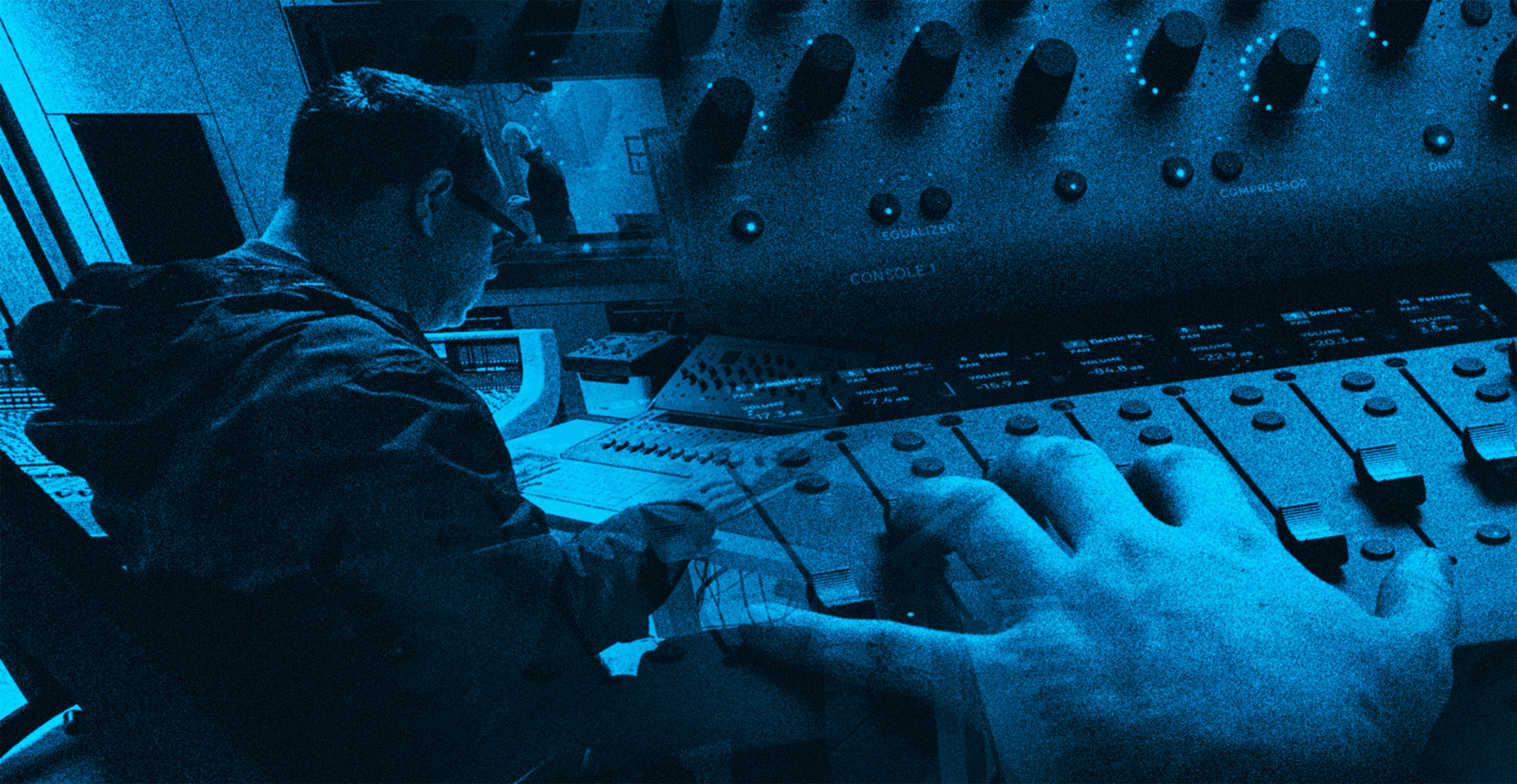
Jason: They've got seven Faders and seven Channels that they just purchased for the Conservatoire. They've always been really forward thinking in terms of accessibility and inclusion. From the time I met them, their whole idea was, ‘We want to make sure that our program is accessible to everyone,’ and they started asking me about what is accessible, what I recommend. And, of course, first was Console 1. I had been working with Arvid and Patrik and Niklas [at Softube], and they were doing some amazing things.
I don't know if I'll be digressing too much, but when I first got Console 1, Patrik sent me a Fader and a Console 1 Mk II, and said, ‘We've been trying some accessibility. Have a look at it and let me know what you think,’ right? I looked at it and I cannot believe what I saw as a first draft. I was thinking to myself, ‘Okay, you don't need me.’ That being said, I've been working with them since, and given ideas. And just the way the company thinks, how forward thinking it is. Niklas, as busy as he is, he's never more than an e-mail away, or phone call. I get emails from Arvid in the morning: ‘Hi Jay, I have an idea. Let's talk.’ To me, accessibility is much more than the hardware and software being accessible, it’s about the personalities behind it, and this is why it was so easy to recommend Softube as a company to the Conservatoire.
It's broken down a lot of barriers because I work with both sighted and visually impaired people and having something like Console 1 makes it possible because of its tactile nature and how Softube has done all the metering and everything. It's just easy. It makes it very possible for collaborations between blind and sighted people. Joe and I work together all the time. And, as I always tell Niklas when we speak, when I use Console 1, I feel for that moment that I'm not blind. You know, this is the power of what you have done at Softube. To have it in the Conservatoire just means that so many barriers have broken down. The future of accessibility and inclusion is in great hands.
“The long-term aim for us is to be able to confidently say, to anyone that wants to come and study at Royal Birmingham Conservatoire, sighted or not, that we've got you and you can come and study the same degree and have the same experience and come away with the same skill set, the same toolkit, for your future career that anyone else would have.”
Courtney (Softube): It's so nice to hear. And so inspiring to hear. Can you elaborate further on the goal for the project from either of your points of view?
Joe: The long-term aim for us is to be able to confidently say, to anyone that wants to come and study at Royal Birmingham Conservatoire, sighted or not, that we've got you and you can come and study the same degree and have the same experience and come away with the same skill set, the same toolkit, for your future career that anyone else would have. Accessibility to absolutely everything is going to be a longer journey. But certainly, with Jay on our teaching team, we've got a fantastic opportunity to try and make our course accessible to any blind musician or visually impaired musician that would want to come our way and learn. We're lucky that we have these Console 1 systems as part of our toolkit now, so that we can, in the long term, have a course that's fully accessible in that way. That's the goal.
“What you have done is make mainstream hardware and software accessible. So, I don't need to buy something different. I don't need to buy a different mixing system to a sighted person, you know, and that's where you're creating universal access.”
In the short term, as Jay's already mentioned, he's working with both sighted and visually impaired students. So already things are way better than they were even a year and a half ago. But we'd like that to be more formally baked into the degree structure so that we can say to the world, you can come and study here, and you'll have an equal experience.
Jason: And the only thing I would add to that is that my personal goal, and it's been started to be realized already, is to break down those barriers. Because, when people started to think about accessibility, there was a difference of ‘Okay, we're going to build things for blind people. We're going to build things for sighted people. These are blind people tools, and these are sighted people tools.’ What you [at Softube] have done is make mainstream hardware and software accessible. So, I don't need to buy something different. I don't need to buy a different mixing system to a sighted person, and that's where you're creating universal access. And this is my goal for the program going forward.
“Part of all this, as well, is actually offering the opportunity for all of us to kind of upgrade the way we work and learn. It's a perfect proof of the value of having diverse teams, and of having the tools to support that, that the rising tide raises all ships.”
There should be a time, I think, where it would not be necessary to have conversations about accessibility because it just would be. Everything would just be accessible. And you demonstrated this when the Flow Studio was launched. Niklas sent one over to me, and it was, ‘Okay, Niklas, tell me, is it accessible out-of-the-box?’ And he says, ‘Jason, we're working on it. It's going to be soon.’ I received the Flow Studio, I think, on Wednesday, and on Thursday morning I get an e-mail, ‘Hi, Jay, here's an accessible version of the Flow Studio software.’ It doesn't get better than that, right?
When the Conservatoire received the courier-delivered Console 1 systems, we opened the boxes, and we set up an accessible studio in a couple of hours. Seven accessible studios, right? It doesn't get better than that, you know.
Courtney (Softube): Love the points about everyone being able to use the same tools and not having these conversations in the future. It's a fantastic goal.
Joe: Well, it's worth adding to that what you bring to our department, Jay. Your day-to-day way of working has lots that's really valuable to a sighted musician as well. I mean, when you first came in and did some master classes for us, I remember one of my colleagues saying like, 'Bloody hell, I've never seen anyone work that fast.’ So, part of all this, as well, is actually offering the opportunity for all of us to kind of upgrade the way we work and learn. It's a perfect proof of the value of having diverse teams, and of having the tools to support that, that the rising tide raises all ships, and it works in both directions; we're benefiting a lot as well in terms of improving our skills and the way that we work.
“What means a lot to me, and what I want to know, is that three years from now the company would still be behind accessibility, and that was proven when the Mk III came out and then again when the Flow Studio came out, right? The company's commitment, that was a driving force for me.”
Jason: I'm so inspired by the standard of teaching at the Conservatoire. I mean, if you're just walking through the halls and walking among the rooms and you pass by the room where some drummers are playing and it's like, ‘Wow, this is amazing!’ You pass by a room where somebody's playing piano, singing, and I just think, ‘This is where it's at.’ So, I mean, I just bring a tiny piece to the puzzle to the table, but the standard of what you’re actually doing... I have some students and I'm actually scared of these students because I'm thinking these students are probably better than I am.
Joe: You get used to that feeling, Jay. I get that too.
Courtney (Softube): You both sound like you've found the right place to be. It's really great to hear. As you thought about making the Royal Birmingham Conservatoire more accessible, how did you settle on adding Console 1 Mixing System, Joe?
Joe: It's mostly been on Jay's recommendations. We have other control surfaces across the studios. I mean, we've got kind of bits of everything. All our studios have kind of hybrid SSL desks in them. And they're great, but they're not accessible. Not even remotely accessible in the same way. Certainly, one of one of the main drivers for [Console 1 Mixing System] was talking to Jay about what we could do to get someone into our studios to be able to operate in the same way that a sighted student would, and the tools that were in [our studios] weren't up to that particular task. The fact that through the Console 1 system you have a very channel strip-like experience and ways of bringing in different models and things – all that was really exciting to us. And the fact that it has accessibility built into a mainstream product, as Jay has said, meant it was an ideal tool. Principally it came on Jay's experience and his recommendation, but also from the fact that we'd identified this hole in the accessibility of our studios.
Jason: I will just add that, well, for me it was a no-brainer, right? What drove me, besides it being accessible, is that [Softube] is making it future proof. What means a lot to me, and what I want to know, is that three years from now the company would still be behind accessibility, and that was proven when the Mk III came out and then again when the Flow Studio came out, right? The company's commitment was a driving force for me. That was as important as the actual units being accessible, knowing that Arvid is an e-mail away, Niklas, Patrik, an e-mail away. I could go in with 100% and tell the conservatoire, yes, spend your money, buy seven of these, we're safe.
“I think Console 1 needs to be on the desk of every visually impaired person who's into music production. To me, it's like you have a problem with your sight, you put on a pair of glasses, and you're good to go. This is what Console 1 is in terms of a device for visually impaired people. That's the power of it.”
Courtney (Softube): So, what does the current setup for these seven Console 1 units look like? You mentioned Channel and Fader, and then you purchased special keyboards as well?
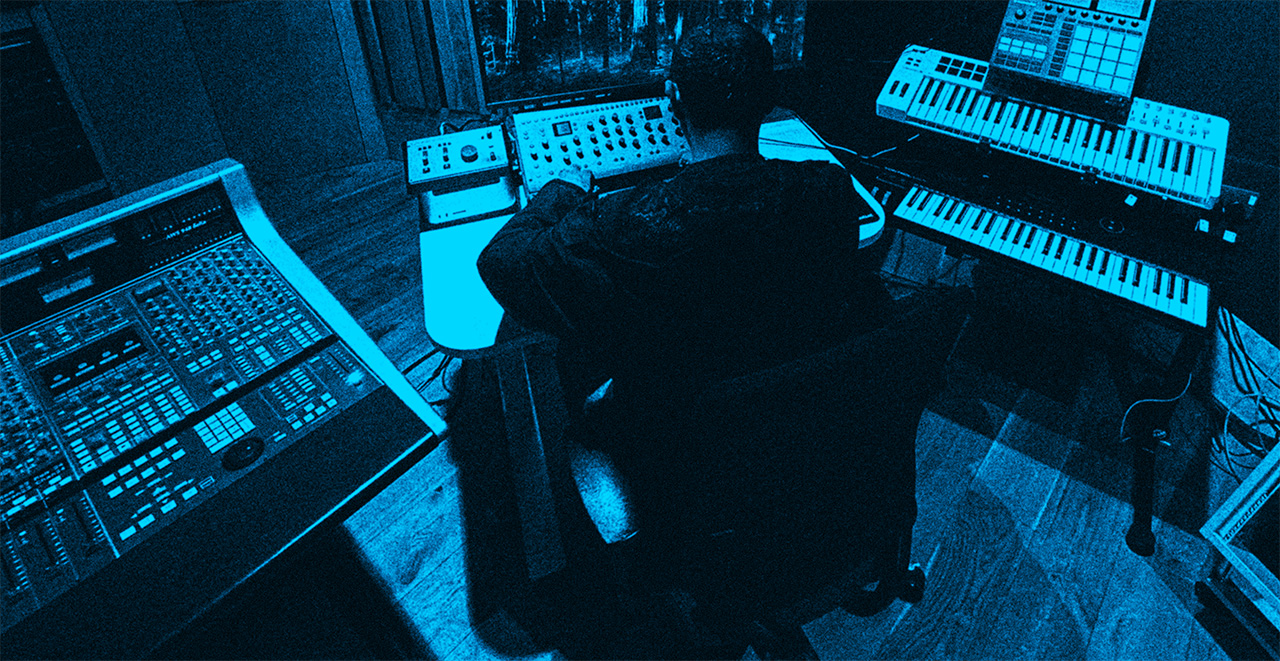
Jason: Yeah, so what we've put in the studios – well, they have a lot of nice stuff in the studios, really nice stuff – but when I came to the table, we brought the Console 1 Channel and Fader, right? Besides Channel and Fader, they have the Native Instruments S49 MK3 keyboards, which are accessible. They have the Arturia Key Lab Essentials, you know, with Analog Lab, which are accessible. They have Native Instruments Machine, right? And I work with them on Logic and Pro Tools.
Courtney (Softube): That set up sounds fantastic. What has the reaction of the students been?
Jason: So, the reaction of the students, first of all, they were quite fascinated with all the new gear. I'd have people come and sit with me for an hour, and instead of getting into their stuff, we would fire [Console 1] up. We'll open up the Core Mixing Suite on Console 1. They'll bring their Logic projects, you know, and we fire up a Console 1 plug-in on each channel and say, ‘Okay, let's do this. Let's work with your drums. Let's work with your vocals,’ right? I have students who don't really speak much English, but music is such a universal language, and they'll respond by like a high five or fist bump or something like that. We have students that, don't really speak much, but when they're in it, they’re like, ‘Wow, cool.’ And I'll be on Console 1 and show them what's possible.
You know, students like to run late, right? I shouldn't say that because I'm always late with everything. This guy had a submission, and he brought in this thing he had done, piano and vocal, and he came panicking quite a lot, right? 'Oh no, the deadline is this evening.’ So, I said, ‘Okay, it's cool. Let's bring it up, load up the project in Logic. Fire up Console 1. Okay, what do you find? The vocal list, okay, let's bring up a compressor. Let's bring up the SSL EQ,’ you know. Within half an hour, he couldn't believe it. He was ready for his submission. So that's the kind of experience we're having.
“The fact that they could start learning a more hands-on workflow, something that's similar to what you might be doing at an analog desk, and that gets you away from the trackpad and keyboard, there's been a good few come up to me really excited about that as well.”
There's one girl, when I spoke about people being better than I am, there's one musician from China. This girl is worldclass in talent, right? Where she needed some assistance was in engineering. She can compose - she's really good - but she needed some help in terms of mixing and stuff. And the Console 1 allows me to show her ‘Okay, this is how we use filters, high-pass filters.’ I'm able to show her what she needs, and to offer her what she needs. I can do it with Console 1 to the point where now it's so comfortable that I can actually turn VoiceOver off, and just use it for confirmation when I need it, because the layout of the units is fantastic.
Joe: The students who are really accomplished and really comfortable with their mixing work, when we first put those units in the studios, a few people came up to me really excited that they were there and they were really excited to get in and try the different emulations and explore. Also, the fact that they could start learning a more hands-on workflow, something that's similar to what you might be doing at an analog desk, and that gets you away from the trackpad and keyboard, there's been a good few come up to me really excited about that as well.
“You all have a respect. You respect musicianship, you respect engineering, and you don't take it away from us. And I think that's what keeps you ahead.”
Jason: And I guess that's [Softube’s] intended goal, right? That people can get hands on. What I love about Flow Studio is it doesn't take away the artistry of mixing and mastering. A lot of these AI things are coming out now, and they actually just take what is more of an assistant that sets up the chains and everything, but I want to master my own thing. I don't want a piece of software to automatically do it for me. And you all have a respect. You respect musicianship, you respect engineering, and you don't take it away from us. And I think that's what keeps you ahead.
Joe: You know, the accessibility side of things is obviously really exciting to us, but also the hands-on workflow is really cool. And it's right in line with how we're always trying to get the students out of their bedrooms and out-of-the-box and to use their ears more. So, it's exactly the sort of tool that we like to have as an option for people.
Jason: I think Console 1 needs to be on the desk of every visually impaired person who's into music production. To me, it's like you have a problem with your sight, you put on a pair of glasses, and you're good to go. This is what Console 1 is in terms of a device for visually impaired people. That's the power of it.
Courtney (Softube): Well, that's the perfect note to end on. Thank you, Jason and Joe!
Jason: Thanks so much for having us.
Joe: Thanks so much for your time.
Joe Wright is a lecturer in Music Tech at Royal Birmingham Conservatoire. Jason Dasent is a music producer, audio engineer, and accessibility consultant who has been invaluable in the development of Softube’s Accessibility Features for its hardware products.
MASTERING FOR SPOTIFY:
WHY EVERYTHING YOU KNOW IS WRONG (AND WHAT TO DO ABOUT IT)
Spotify provides mastering and loudness guidelines for those of us supplying music for their streaming platform, but what do these guidelines really mean for you as a producer or mastering engineer?