FJAAK: BEHIND THE NOISE
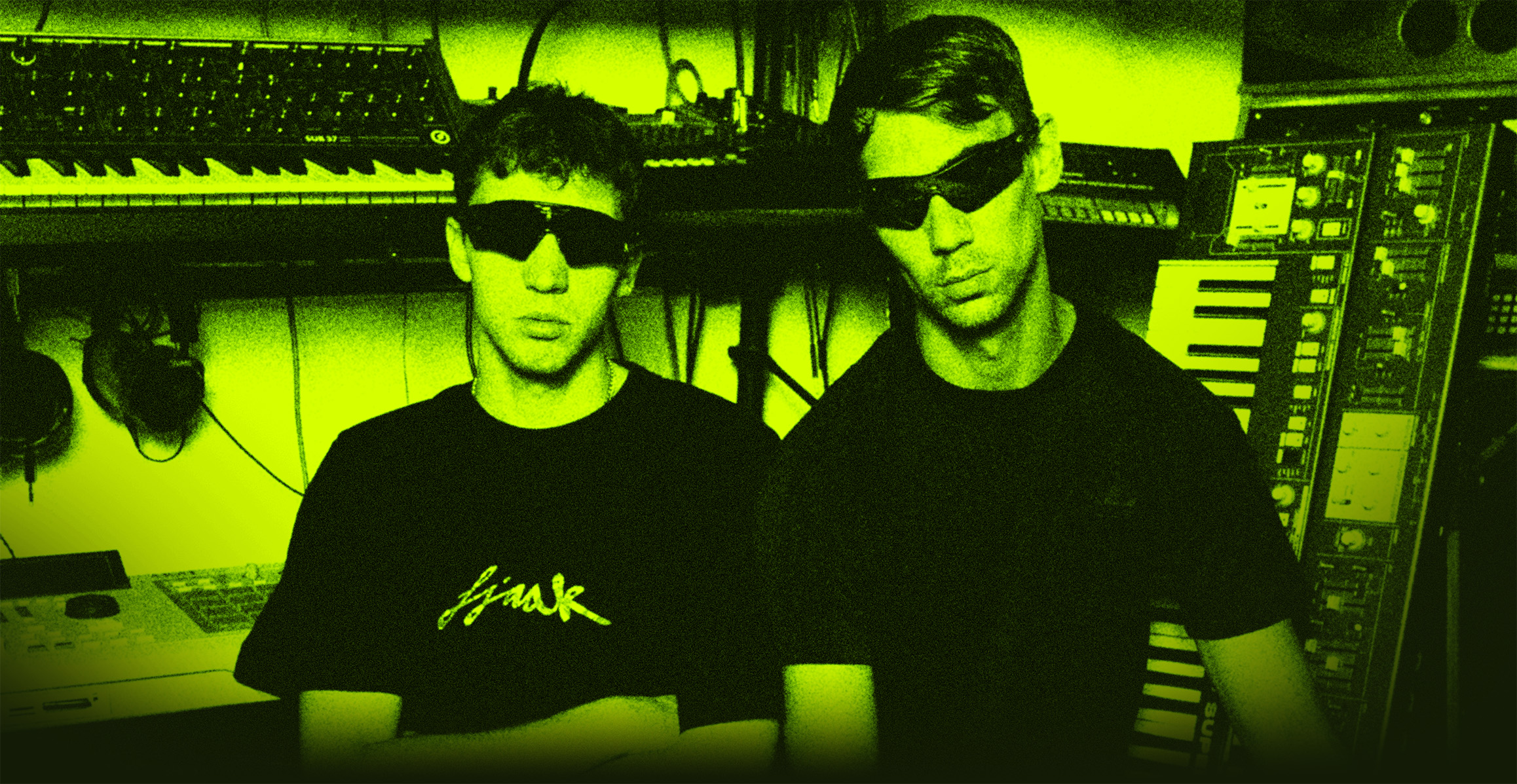
Interview by Stefan Wyeth
Like many styles of music, Techno is inundated with purists. Is it possible to stay true to an authentic sound while using software? Let's find out!
Today, the world-renowned Techno duo, FJAAK, constantly pushes boundaries with their high-energy warehouse-influenced sound. Initially, they started out in 2009 as a group consisting of four members: brothers Felix and Johannes Wagner, Aaron Röbig, and Kevin Kozicki. Fueled by their mutual love for music and underground rave culture, FJAAK began releasing music and running illegal dance events in and around Spandau, the West Berlin district where they grew up.
With consistent releases on renowned electronic labels like Baalsaal Music, Tectonic, and Monkeytown Music, as well as appearances at some of the major festivals and club nights around the globe, FJAAK has become one of Techno's most in-demand acts. Along with their close friends, the group is also actively involved in the curation of their three labels: CROWD, Spandau20, and FJAAK, with some exciting releases on the horizon.
We recently caught up with Felix and Aaron while on tour in Hawaii to geek out and learn more about their creative process, sources of inspiration, and what projects they have on the go.
On the production side, FJAAK has been active in the studio now for over 15 years. How has the creative process changed since the early days?
The fundamentals of our creative process remain unchanged. However, as plugins have improved significantly over the years, we find ourselves working more "in the box," leveraging digital tools alongside analog elements. It's always been about blending the best of both worlds.
"In the studio, we let out whatever is within us, and often we don’t know what to expect at the end of the night. It’s about capturing a moment of inspiration."
In your formative years, rather than the fairytales we hear about Norman Cook finding a 303 at a garage sale, you were exposed to music production through software cereal boxes. How did this influence your musical vision compared to when you discovered hardware later?
Working digitally from the beginning allowed us to develop a fast and efficient workflow, which is crucial for capturing ideas as they come. While analog can sometimes be cumbersome, especially when dealing with wiring issues, the ease of digital production means that we can focus on creativity without being hindered by technical challenges.

Analogue-modelling software has been a part of music production since the 1990s, with software like Rebirth RB-338. When did you first discover plugins that could emulate hardware accurately, and what was your response when you first came across Softube plugins?
Since our inception, we’ve heavily utilized digital tools, especially DAWs, which pushed post-production to new heights. Early plugins didn’t accurately replicate analog gear, but some digital processes, like gain riding, were superior. With the advent of DSP technology, there was a revolution in plugin quality. Today, many studios are predominantly digital, incorporating a bit of outboard gear for final touches. We found Softube's plugins particularly interesting because they provide remarkably accurate emulations of classic hardware that we couldn’t otherwise afford.
When you start off the creative process of making a FJAAK track, do you come to the studio with a demo/sketch on your laptop or just a feeling you want to express? Do you reach for hardware or software first, and does this matter in the bigger picture of a FJAAK production?
There are no strict rules for how we start a track. It can be digital or analog, and both approaches are common. What matters most to us is the joy of creating music. We’re not fixated on producing releases or products; we actually release less than 1% of what we create, keeping much of it for ourselves. In the studio, we let out whatever is within us, and often we don’t know what to expect at the end of the night. It’s about capturing a moment of inspiration.
When you created your most recent album, FJAAK THE SYSTEM, roughly what percentage of the sounds were software-generated vs. the parts that come from hardware? (I know it's hard to keep track!)
We would say it’s almost a 50/50 split. We use analog gear not necessarily because it's superior, but because we enjoy the process and sometimes find it easier to create specific sounds or textures. While analog can be great for adding warmth and character, digital workflows allow for quick recall and efficiency. For instance, replicating an elaborate analog signal chain can take ten minutes, while a digital chain can be copied and pasted across projects in seconds. Recall is vital for fast workflows.

What is your favorite aspect of Softube software, and do you use it more for creative processes or technical tasks like mixing?
The best aspect of any digital gear is the ability to recall settings and the overall workflow. We utilize Softube plugins for both creative tasks and mixing/mastering. In particular, their neutrality can be key in mixing; software-based EQs and dynamics processors often provide a level of precision and clarity that can enhance our productions.
If you create a synth lead, bassline, or drum loop with a software instrument, do you then go and replace the sound with hardware, or is it good to go? Which Softube plugins are particularly good or realistic-sounding in this regard?
For us, the origin of the sound whether it's digital or analog doesn't matter as long as it sounds good. Many of our synth lines are purely digital, while others layer both methods. In today’s landscape, there are no strict rules; if something sounds dope, it’s valid! Among Softube’s offerings, we particularly enjoy using the Heartbeat and Model 84 for their realistic sound.
When you load up your favorite Softube instrument or processing plugin, what aspects or features make it fit into your process? Is it the workflow/interface, the sound, or a combination of elements?
It’s definitely a combination of elements. As we mentioned, workflow is essential. The design and interface of a plugin can either facilitate or hinder that process. Some plugins are poorly designed, making it difficult to locate needed functions. Effectively translating a classic machine into a digital plugin while maintaining an intuitive interface is incredibly helpful. Ultimately, though, if a plugin sounds great, we’re less concerned about its design.
"We’re always on the lookout for new gear and plugins, practically every single day."
Is there a particular plugin or piece of Softube gear (like Console 1) you’ve had your eye on for a while?
We've been using Console 1 for a long time, and it's fantastic, especially for its workflow and the channel strips (both British and American), which sound wonderful. We’ve tried many Softube plugins and definitely want to explore all of them.
If you had to design your own Softube plugin, would it be something based on a classic piece of gear or something modern?
Honestly, it’s time for something new and innovative. While vintage gear from the '70s, '80s, and '90s is fantastic, we also need fresh inspiration and sounds that the next generation will want to emulate. What’s the next iconic acid bass synthesizer or drum machine? Why not incorporate more modern concepts like binaural or granular synthesis, or even explore AI-generated sounds?
How often do you go looking for new gear and plugins, and what are you looking out for from new instruments and effects in terms of features?
We’re always on the lookout for new gear and plugins, practically every single day. Making music is like an endless game with constant updates, and it’s incredible to live in this era with an overwhelming array of new tools and gear. There’s always something fresh to try, and that endless flow of innovation is a source of inspiration for us.
Spandau20’s 10th VA compilation has just been released. Could you tell us a bit about the formation of the Spandau family and your vision for this series of releases?
The Spandau20 crew is truly like family and our closest friends. We began creating music and hosting illegal raves over 15 years ago. Sharing our passion and pushing each other creatively is a rewarding experience. We’ve always loved the idea of labels functioning as a collective. Our 10th VA compilation feels more like an album, showcasing connected minds on a mutual journey through sound, reflecting our shared fascination with music.
Live sets are a big part of the FJAAK identity. Please could you tell us a bit about your approach to live performance?
The evolution of live gear is ongoing, and it’s an exciting time for live performance. The possibilities for expressing our music are virtually limitless. We perform exclusively from hardware without a computer, so we don’t use any plugins in our live setup.
You guys are involved with three different labels. What projects are you working on in 2025? More tasty tunes in the pipeline?
Absolutely! We have several new EPs coming out on our labels CROWD, Spandau20, and FJAAK. Additionally, we’re developing a new live show and hybrid performance setup, along with a new album slated for release in 2026.

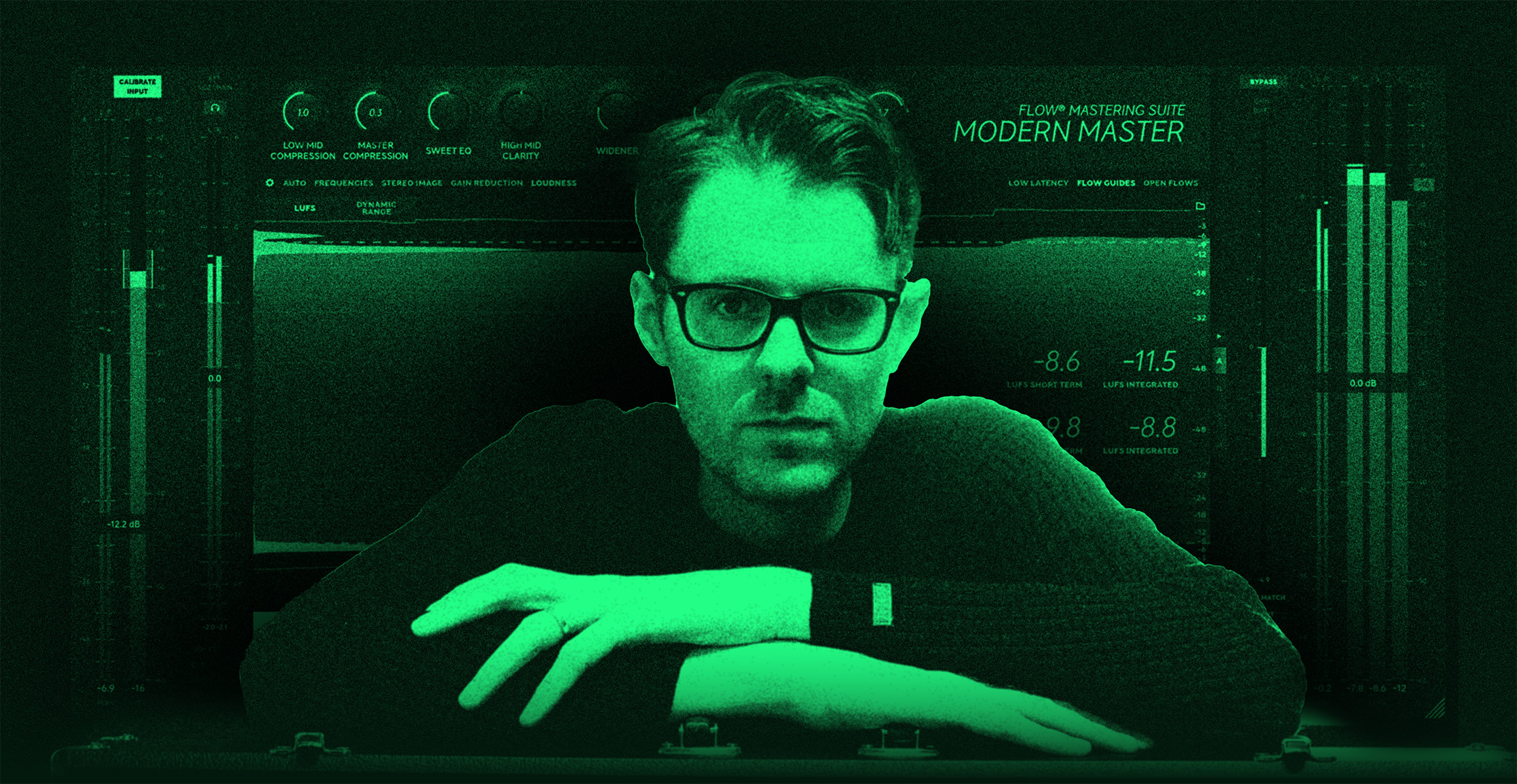
MASTERING FOR SPOTIFY:
WHY EVERYTHING YOU KNOW IS WRONG (AND WHAT TO DO ABOUT IT)
Spotify provides mastering and loudness guidelines for those of us supplying music for their streaming platform, but what do these guidelines really mean for you as a producer or mastering engineer?
UNLOCKING FLOW:
HOW MUSICIANS & PRODUCERS CAN TAP INTO THEIR CREATIVE BRILLIANCE
Have you ever found yourself in a state where time disappears, every move feels effortless, and you are fully absorbed in creating? If so, you've experienced flow—the ultimate state of creativity and focus. In this article, we'll dive into the flow state, and how to create the conditions to access it more easily.