
INSIDE THE MIND OF A MASTER: A CONVERSATION WITH MAOR APPELBAUM
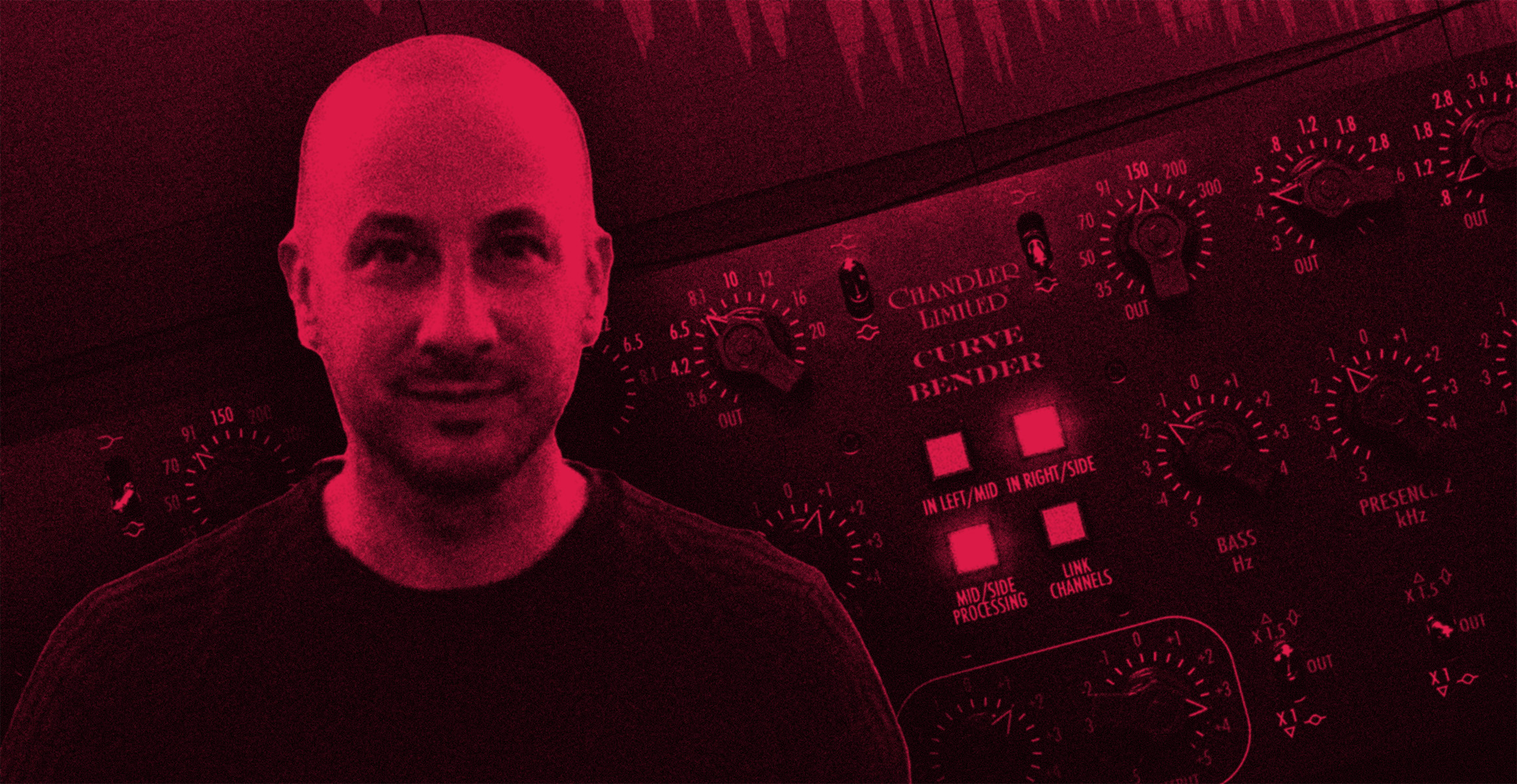
Mastering is often described as the final polish on a recording, but as Grammy–nominated mastering engineer Maor Appelbaum reveals, it's so much more than that. With a career spanning multiple disciplines – from music journalism and radio broadcasting to performing in bands and engineering – Maor brings a unique perspective to the mastering chair. His extensive gear collection, much of it co–developed or modified to his specifications, reflects his deep commitment to the craft.
In this conversation, Maor shares insights on what makes a great master, the ongoing loudness debate, and why mastering is as much about emotion as it is about technical precision. He also discusses his work on our Flow® Mastering Suite and offers valuable advice for producers and mix engineers preparing their tracks for the mastering stage.
How did you know you wanted to get into mastering in the first place?
I was a music journalist for magazines and internet publications, and I had a radio show. I was also a DJ at clubs, had bands of my own, and recorded my own stuff. Because I did all that, I have a perspective from the outside. All those things are basically about what's already out or what's coming out. Mastering is that place before it's out, which gives me the perspective of the first listen – absorbing it, understanding what I'm hearing, and translating it to the real world for first–time listeners. Of course, people will come back to it later, but being from the outside looking in helps me. I found that I just enjoy that process even more, and I feel very creative there, where I can bring my experience, knowledge, and taste into the picture.
“Mastering is actually very subjective. It's not as technical as people might assume.”
What was it about mastering? Why did you want to get into mastering?
I like to shape the final result – to take what is already there and find a way to shape it. In mixing, you build the mix from scratch. As much as I could do that on a console, I felt that I shine better in mastering. If you bring me a console and some tracks, I'll enjoy blending them, EQ-ing them, getting something together. But today's mixing is very different than before. A lot of mixing now is also editing, vocal tuning, drum editing, and replacing tracks. It's less interesting for me. I mostly like the balances and EQs and the rest of it.
Mastering is more about hearing it, reacting to it, and figuring out what works. Mixing is more about really working to blend elements. Both jobs are hard to be really good at. Of course, mixing takes more time, but sometimes mastering can also be very difficult because little changes can make big changes too.
What makes a good master?
That's a tough question. I think what makes a good master is, one, that it represents the music in a way that gets you excited about it. Two, that it translates really well on different mediums. And three, hopefully everybody's in line with you on it – you like what you've done and they like what you've done. Sometimes you like less what you've done because they ask for changes you don't think are right, but they work. And sometimes they don't work, but that's what they wanted. So hopefully it translates well. It's a very tough question because mastering is actually very subjective. It's not as technical as people might assume. A lot of it is choices that are artistic as well – the tonality, the dynamics, the feel of the song.
“I don't think LUFS is a measurement that really tells me what I'm hearing.”
What would you say is most challenging with mastering?
It's probably hitting the mark. It's a guessing game. You work on something and hope that the client will like it. You're going by your gut feeling, plus knowing what they're expecting, if you know them. If you don't, it's a different case. At the end of the day, you're working with your reaction to it. Some of it could be predetermined by knowledge of what they like or don't like. It could also be testing the ground, trying to figure out what works. The challenge is hitting the mark and making them happy. When they like it and it sounds good and you're happy – wow, that's a challenge on its own. You can hit the mark on the first try, or it could take a few tries. Just because it takes a few doesn't mean it's wrong.
Speaking of clients' expectations and making them happy, could you settle the loudness/LUFS debate for us? How loud do you usually go at this point in 2026? Is it as loud as your clients ask you to go, or do you have a standard approach?
I don't have a target level because I don't think LUFS is a measurement that really tells me what I'm hearing. Maybe they worked hard on figuring that out, but it doesn't translate still. What's important is to see where you can push the song to, where you can take it. It doesn't mean it has to be loud – it could be loud enough. Sometimes a track comes in super loud, and I'm maybe adding a dB or even keeping it at the same level. Sometimes I even lower it a bit. If a record comes in loud and that's the sound of it, I'll work with it as is and try to improve what I can. If the record comes in low and I can raise it, I'll raise it, but not always to the same level. I don't have a fixed target of what's good.
There are certain things that translate more across the board and some don't. You can do a record at -8 LUFS and it will be loud for some and not for others. You could do a record at -6 LUFS and it will be loud for some and not for others. You can do a record at -14 or -13 and it will be decent enough in terms of level. They're all different, and every record has its own place to be in. Sonic balance should be the finality – brightness versus low end and high end and mids, same with dynamics and level. Not everything has to be pushed to be competitive. Some stuff can live on its own. Every project is its own, and some mixes will translate well loud. It's not about the quality of the mix – it's the type of mix. Some mixes can live loud, and become louder. Some mixes, when you make them louder, start to lose their identity and change into something else.
“In a lot of cases, I don't work with true peak. To me, it's not important. What's important is getting the sound right.”
But in terms of LUFS and loudness, do you create separate masters for streaming and CD or vinyl?
No, because it doesn't matter. What I find is that clients want to hear it the way it is. If I give them a quieter Spotify version, it's not what they're used to, and now you're conflicting with them. I just give them the same thing that's going to be on the CD, if they do a CD. That way, the master is equal – there's no version that's different from the other. In vinyl, it's a different case because it's a physical medium that's grooved. There are different things that can happen there. But CD is digital form, so I give the same thing from CD to streaming. Streaming changes the sound anyway based on the algorithms they use. Every streaming service uses their own algorithms and target levels. But I give them the same as what goes to CD. Whatever they do from that, it's on their own.
What's your approach to true peak? Do you accept overs, or what's your view on that?
I don't have a problem with peaks that are overs. There are decades of documented digital audio works that have inter-sample peaks, and they sound great. It's part of the music. Now, if you tell me you prefer a true peak because you prefer the sound of that, then, okay, great. But if you put a limiter and you choose true peak or non-true peak, to me it's more of an aesthetic – I like that sound or I like another sound. I'll choose what sounds good to me. Sometimes the true peak does something interesting, and that's dependent on a certain limiter. But in a lot of cases, I don't work with true peak. To me, it's not important. What's important is getting the sound right.
Let's talk about the Flow you did for Flow® Mastering Suite. What was your thought process in creating that specific signal chain?
I tried to think of what chains would be useful to the user based on the arsenal of stuff that Softube has, and you guys have a ton of great stuff. I picked things that I've personally either made presets for, so I know them, or know from experience – either hardware or software. I built these flows that have a connection with each other. They complement each other together, so you have a setup that can work. Does it mean it will work for everything? No, you'll probably have to make adjustments. Some you might have to bypass or move to a different Flow. But they cover a lot of ground, and you can play with them.
“A lot of times people get caught up with stuff they saw online because someone was using multiband and widener and this and that. It's not always needed.”
Are there any tips and tricks you'd like to share regarding your Flows? Something to keep in mind while working with them?
Take into consideration that some of the Flows have to do with coloration or vibe, however you want to call it. Be aware that what comes in doesn't come out exactly the same, just louder. It will actually add character to it. You can toggle between the Flows and see which one is closer to what you want just by default, then tweak whatever's needed, if needed. The macros are a great tool for that. But if the macros aren't enough, go in and bypass what you think is needed and tweak inside.
The trick in mastering is really to listen to it. Get what you need from listening to figure out what is there, what problems you gather, and what good stuff. Once you understand that, start moving things to get where you want. Act as a response. Don't act by technicality like, "Oh, I have to put a widener, I have to put a multiband." No. Act on what you feel is needed and play with it. You don't always have to have a multiband. I did put a multiband compressor in some Flows, but you don't always have to have that. You don't always have to have a widener.Take into consideration that some of the Flows have to do with coloration or vibe, however you want to call it. Be aware that what comes in doesn't come out exactly the same, just louder. It will actually add character to it. You can toggle between the Flows and see which one is closer to what you want just by default, then tweak whatever's needed, if needed. The macros are a great tool for that. But if the macros aren't enough, go in and bypass what you think is needed and tweak inside.
A lot of times people get caught up with stuff they saw online because someone was using multiband and widener and this and that. It's not always needed. There are a lot of masters that don't even have multiband in them or width in them. Just because the tools are there doesn't mean you have to utilize every function. What's cool about a Flow is it's a bunch of plug-ins in a row that you can access each one separately. If one function isn't working for you, you can either bypass the whole plug-in or just zero that function. If there are too many highs, just go to the high knob and lower it. You have accessibility to each one of the parameters of each plug-in in the Flow.
Do you work a lot with automation in the mastering stage? Like adding a widener to a certain part of the song or something like that? Or do you leave that to the mixing process?
Even though you can do that in the plug-in world, a lot of times I prefer to find sweet spots instead of automating stuff. There are times where I'll automate the sound pushing into the desk, where if there are areas where I need to drop or raise, I can do that if needed. For example, if there are some tom hits or hits that are just distorting and everything else is good, or if something's happening with the chorus that might not be jumping enough, or something in the verse is too loud, then I can automate how I'm sending to the desk through the gear.
There were times where there was something problematic, and we had to apply a certain EQ, then bypass it and enable it in sections. But in general, I prefer less automation in mastering. I prefer that to be more in the mixing if needed. But if we're stuck and we have to, then, yeah, it's possible. I find myself doing that a few times. I just prefer finding a good sweet spot that represents the sound cohesively and do fewer changes. Although on a creative level, you can also do that – change the width in the verse or chorus or change certain EQ points. It is doable, and especially when you're working in a DAW in the box, that's even easier. With hardware, you can do some of that, but it's harder to recall the same movement.
“I think it's good to get away from it a bit, to be fresh when you come to the mastering.”
What are some things producers and mix engineers should keep in mind before entering the mastering stage? Either if they're sending their music off to a mastering engineer like yourself, or if they intend to do it themselves but still separate the mixing process and the mastering process mentally?
I think it's good to get away from it a bit, to be fresh when you come to the mastering – either with someone else or even on your own. When the song is already finished and you've had some rest from it, you're listening to it again fresh and not while you were doing it, because you're going to hear stuff you might not have noticed before. Now you're less connected to the same feeling you had before, so you're listening to it more as a finished product. If you listen to it right after doing the mix as a finished product, your ears are already attuned to everything, and they've gotten used to stuff. If you take some rest and listen to it again, it's like listening again to your mix and finding other issues.
You recently made presets for the new Weiss DS5 Multiband Compressor. Tell us a little bit about how you approached creating those presets?
I own an actual hardware version of the DS1-MK2. It's a powerful unit, and so are the plug-in versions that Softube has made. In this case, they actually combined five of them in one unit. So, I took the approach of "If I had such a unit in hardware, how would I use it and set it up for the different tasks I need it for?".
Any particular presets that tackle specific things that you want to highlight?
Every preset can be a good starting point and can be tweaked, so when it comes to low-end instability or high-end that needs taming, they can be very adaptable to the situation.
My suggestion is to use only if needed and, if so, you can toggle between the presets and see if something pops up fitting. It’s an easy start. Also, the name of the preset gives a kind of idea where it takes you, at least by inspiration.

What's your most used Softube plug-in?
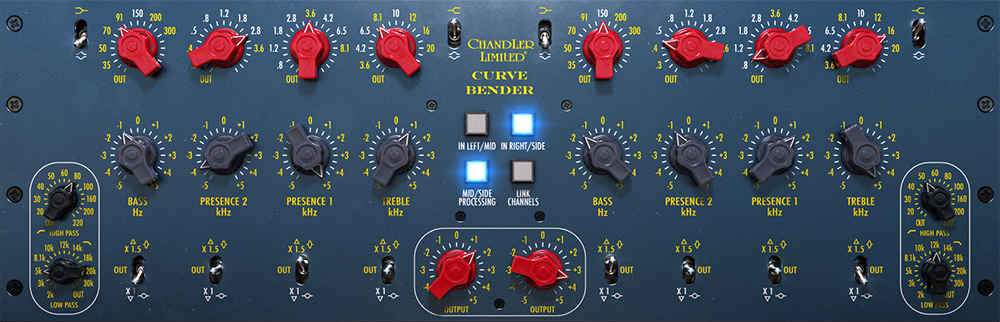
I like the Chandler Curve Bender. The box tone of it is good. The box tone – the actual sound of the plug-in. Even just gaining up a few dBs of level with small EQ, it already does something.
I knew the hardware – I didn't have it, but I'd seen it and played with it a bit. When I did presets for the Chandler stuff back then – the Germanium and that one and the Zener – I came across it and was like, "Wow, this is actually good." I can't say exactly how it compares to the real ones without putting them side by side, but the sound of that unit as a plug-in was really good.
What is it about the Chandler Germanium compressor that's so special, do you think?
It's a bit dirty, but it's not too dirty. There is dirt to it, but it's dirt that fits, especially in certain genres. There's also the Zener limiter – it’s a bit of a different thing, but they have this kind of grainy sound that's good for them. It's more like it has a preamp feel to it.
“There's a lot of emotional value that can be added to the song in the mastering process.”
What is something that most producers don't know about mastering?
I think some – I don't know if most, but some – assume it's only about getting loud levels. I think a lot of them aren't aware that you can actually change the feel of the song and how the audience engages with it. You can take a song that maybe sounds a bit hard and loosen it, soften it. You can make it feel easier to digest, not hitting you hard. You can also make it hit harder. You can make it feel cozy and warm and moving. You can also make it more static and upfront. Mastering is about presentation. You can actually change how the song is presented, regardless of just the volume. You can make people come back to it. You can make people not want to come back to it too much. You can make people feel at ease with it, more energetic, make people get excited even more. There's a lot of emotional value that can be added to the song in the mastering process. You can shed light on it, or you can give it some more darkness too.
Just frame it right – mastering is the last creative part of the production and the first technical part of the distribution. The combination of the creativity and the technical on that last part is very important in order to deliver even better results. It's the last creative part where you can actually enhance the artistic vision of the project.
MASTERING FOR SPOTIFY:
WHY EVERYTHING YOU KNOW IS WRONG (AND WHAT TO DO ABOUT IT)
Spotify provides mastering and loudness guidelines for those of us supplying music for their streaming platform, but what do these guidelines really mean for you as a producer or mastering engineer?

UNLOCKING FLOW:
HOW MUSICIANS & PRODUCERS CAN TAP INTO THEIR CREATIVE BRILLIANCE
Have you ever found yourself in a state where time disappears, every move feels effortless, and you are fully absorbed in creating? If so, you've experienced flow—the ultimate state of creativity and focus. In this article, we'll dive into the flow state, and how to create the conditions to access it more easily.